Facebook. Instagram. The Pipeline Before the Phone Rings.
Meta Ads Run by the Team That Speaks Pool
We made the opposite bet. Since 2012, Pool Profits has marketed pool service and construction companies and nothing else, and on Meta that focus is the whole game. We know the creative that stops a pool owner mid-scroll is their own problem on screen, that a social lead answered in two minutes books and one answered in two hours ghosts, and that winter feeds are where spring schedules get bought at a discount. Full-funnel campaigns, real jobs in the creative, every lead answered in minutes, and tracking wired so the bookings your thank-you page never sees still get counted.
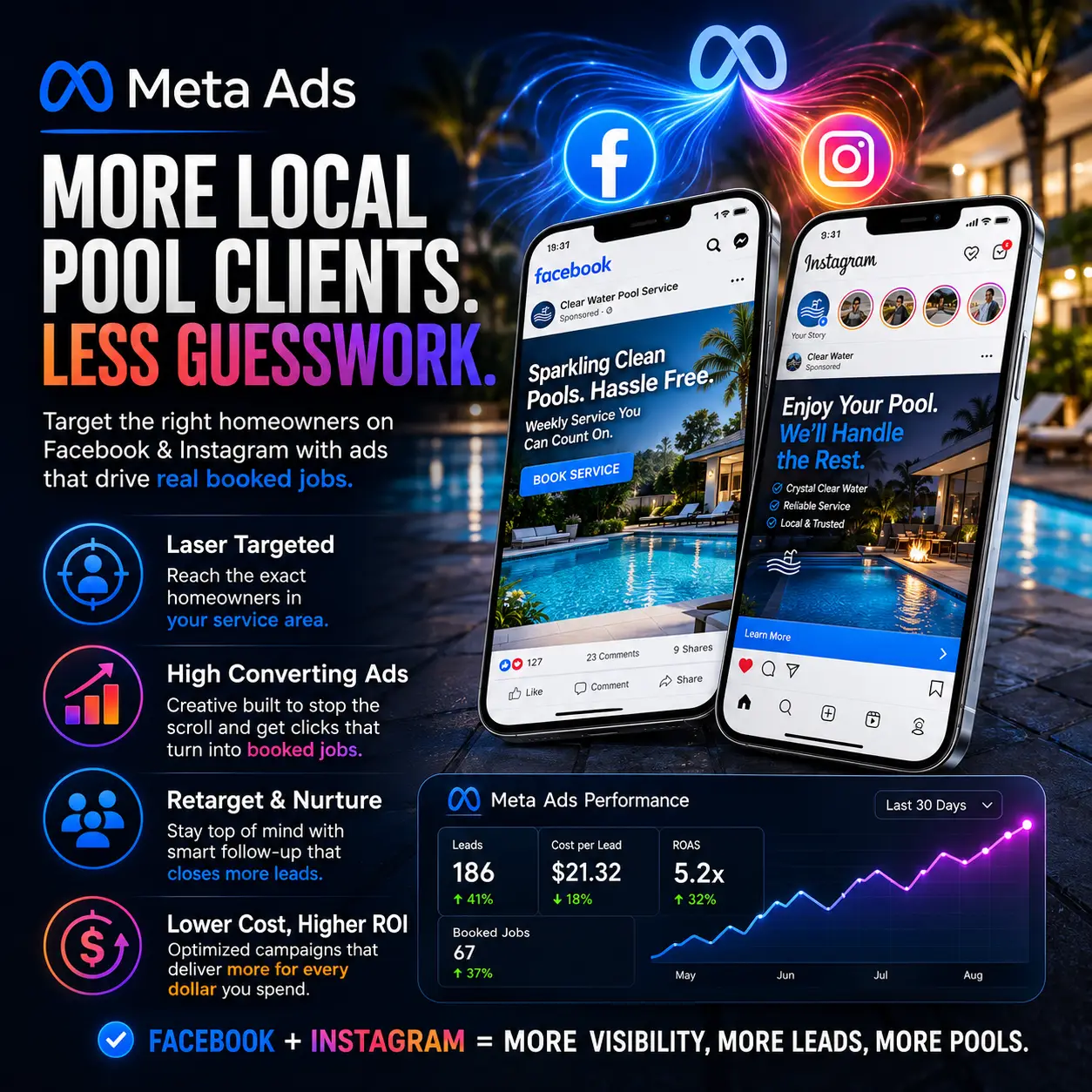

Create Demand For Your Service With Meta Ads (Facebook & Instagram)
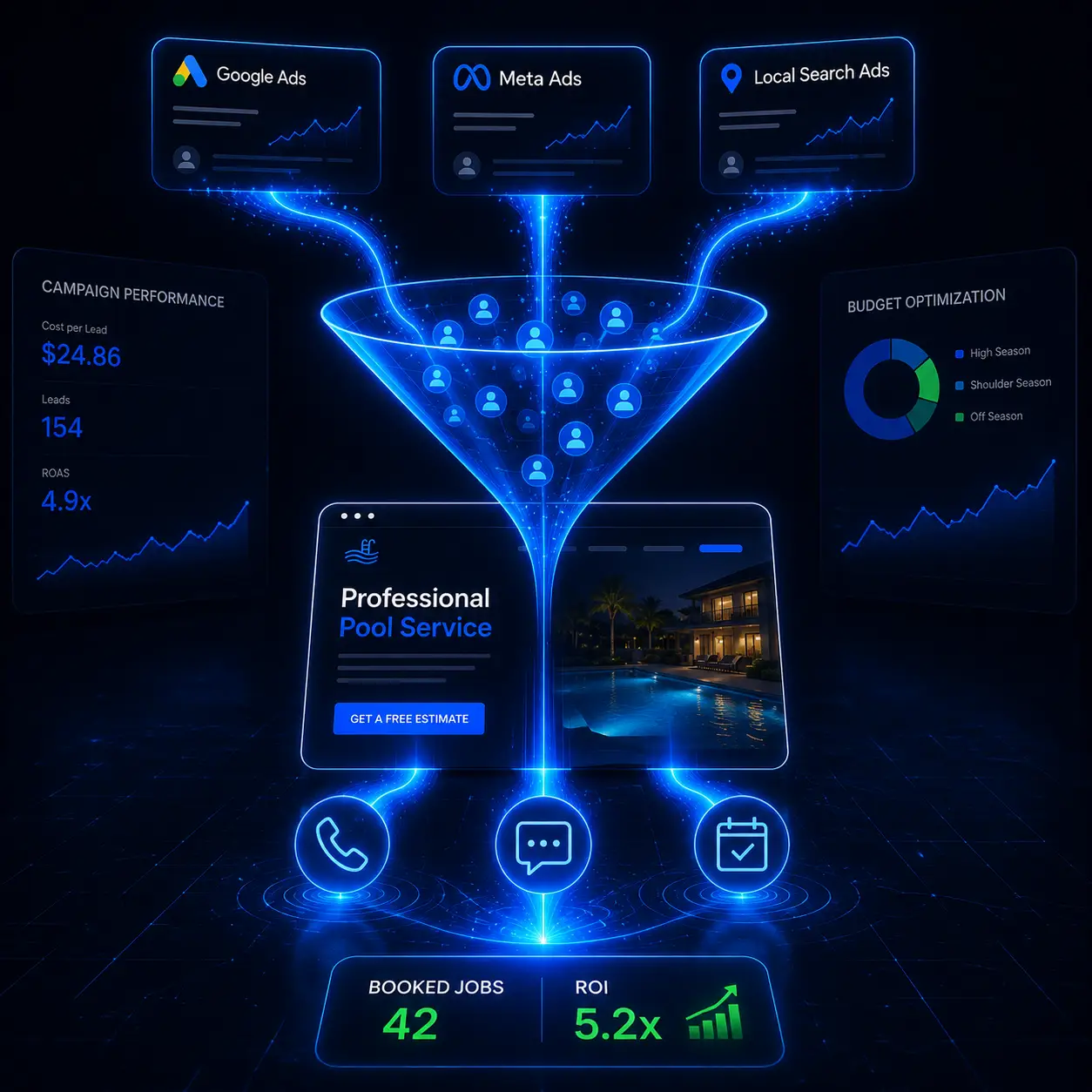
Google Captures Demand. Meta Creates It.
Search ads only reach people already looking. Meta reaches the homeowner staring at a green pool who has not typed anything yet, the family who saved three backyard renovation photos this month, and the past customer who forgot you also do repairs. That is a different job than search, and it is the half of the market most pool companies never touch. Run together with search, Meta creates the demand and Google Ads is capturing the demand your social ads create.
It is also the channel that solves the off-season. When search volume drops in winter, feeds do not. The pool companies that enter spring with full schedules built that pipeline in the months their competitors went quiet.
The Full-Funnel Structure That Makes Meta Profitable
- Cold demand generation: reaching pool owners and buyers in your service area who do not know you yet, with scroll-stopping creative and offers matched to the season. Judged on cost per qualified lead, not reach.
- Warm retargeting: everyone who visited your site, watched your videos, called, or started a form gets followed with proof, offers, and the nudge that converts consideration into contact. The cheapest conversions in the account live here.
- Past-customer and list campaigns: your existing database uploaded as a custom audience for reactivation offers, review requests, seasonal reminders, and referral pushes. Revenue from people who already trust you, at the lowest cost in the system.
- Lookalike expansion: once conversion data accumulates, audiences built from your actual booked customers outperform any interest targeting a generalist would guess at.
Schedule Your Audit...

An Approved Skimmer Partner

Approved partner status in the Skimmer ecosystem, earned by working exclusively with pool companies since 2012.
Campaigns and follow-up systems designed around how route-based service businesses actually schedule, quote, and retain customers.
our acquisition system and your operations platform pulling in the same direction, with every lead tracked from first click to booked route.
What's Included With Our Pool Company Meta Ads Program
- Full-funnel campaign build and management across Facebook and Instagram: cold, warm, and past-customer layers with budgets weighted by season.
- Creative proven in this industry: hooks, offers, and formats tested across 200+ pool company accounts, localized to your brand, your market, and wherever possible your real jobs and photos.
- Seasonal offer calendar: startups and openings in spring, repair and upgrade angles in summer, closings and maintenance plans in fall, remodel and build campaigns through winter.
- Lead quality controls: instant forms and landing pages built to filter tire-kickers before they reach your pipeline.
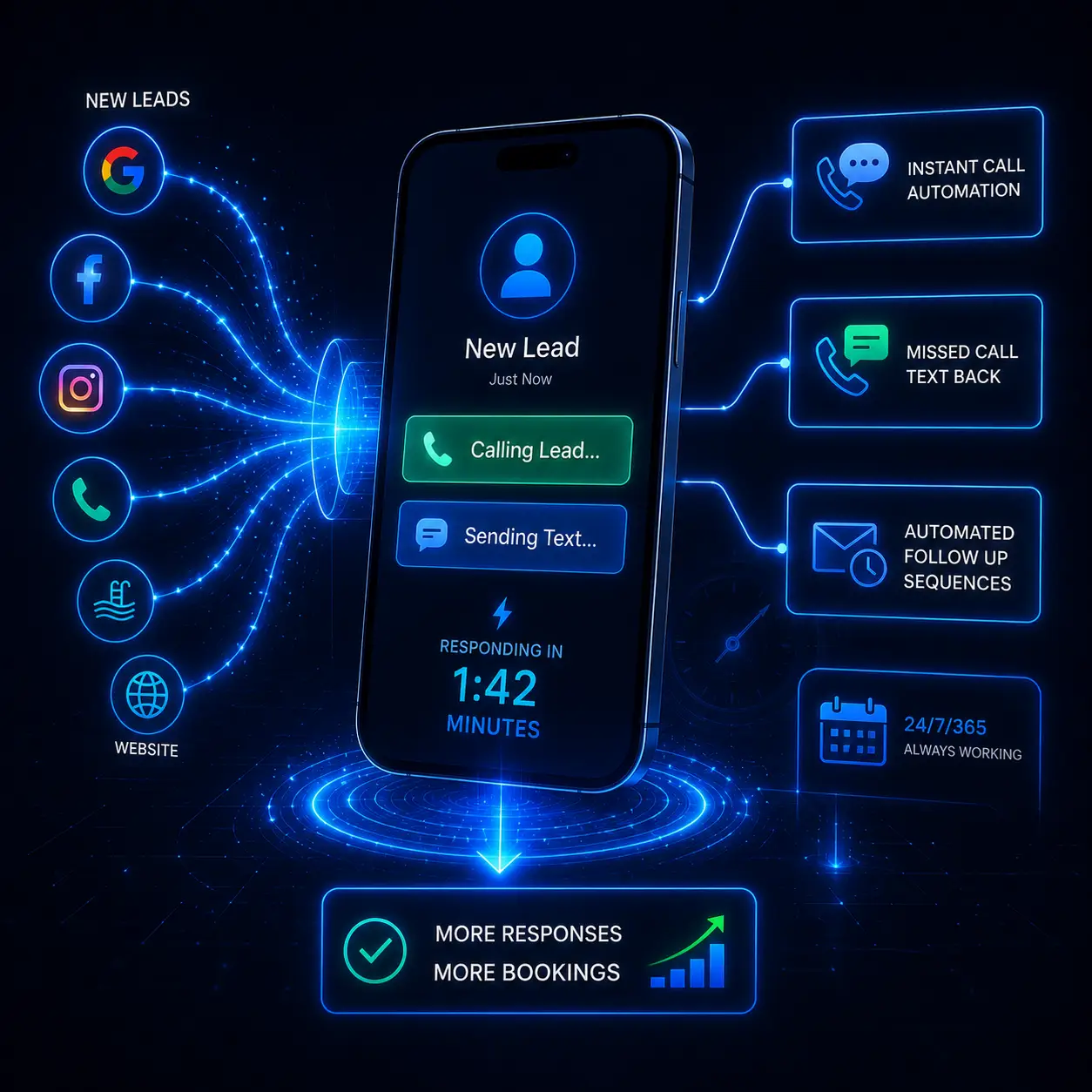
- Instant follow-up wiring: every Meta lead triggers speed-to-lead texting and nurture automatically, because social leads decay in minutes, not days.
- Server-side conversion tracking: pixel plus Conversions API, so bookings that happen off the thank-you page still teach the algorithm what a real customer looks like.
- Unified reporting: leads, cost per lead, and cost per booked job by campaign, alongside every other channel in one dashboard.
Creative Is the Targeting
On Meta, the algorithm finds your buyer, but only if the creative tells it who the buyer is. Nothing stops a pool owner mid-scroll like their own problem on screen: a green-to-clean transformation running in fifteen seconds, a before-and-after carousel of a resurfacing job, a founder-voice video explaining what a failing pump sounds like. That creative does double duty, arresting attention and self-selecting the audience, which is why authentic local footage consistently beats polished stock in this industry. The click then has to land somewhere that converts, which is why every campaign pairs with landing pages that convert social traffic instead of a homepage.
Instagram earns specific attention for builders and remodelers, from visual campaigns for pool builders filling design consults to before-and-after remodeling creative, and it works the same way for hot tub and spa showrooms selling a lifestyle purchase. Backyard transformation content is native to the platform, the save and share behaviors map exactly to how build projects get planned, and the household decision-makers researching a renovation are already there collecting ideas. For construction-side campaigns, Instagram is not a checkbox next to Facebook. It is frequently the stronger half of the buy, and we creative-plan for it deliberately.
Just as important is what we exclude. Pool ads waste money on renters, out-of-area clicks, and bargain hunters unless audiences, offers, and form questions are built to filter them. Ours are.
The Tracking Problem Almost Every Pool Company Has, and Most Never Find
Here is a pattern we see constantly in audits: the ad account reports a handful of conversions, the calendar shows three times as many booked calls, and the owner concludes Meta sort of works. It is the most common finding in the accounts we have rebuilt and reported on. What actually happened is that most bookers never hit the thank-you page the pixel watches, so the platform never learned they converted. The consequences compound quietly: reported cost per lead looks worse than reality, and worse, the algorithm optimizes toward the wrong people because it only sees a fraction of the real customers.
The fix is server-side tracking through Meta’s Conversions API, firing on the events that actually matter, booked appointments, real form submissions, qualified calls, with proper match keys so the platform connects the conversion to the person. We build this into every Meta engagement as standard plumbing, not an add-on, because a campaign optimizing on partial data is a campaign leaving its best audience unfound. It is also why our reporting reconciles with your calendar instead of arguing with it.
The Off-Season Is Where Market Share Changes Hands
Watch what happens in your market every winter: most pool companies cut spend, go quiet, and wait for spring to restart cold. The few that stay visible spend less per impression than at any other time of year, fill their remodel and equipment pipeline while competitors sleep, and open the season with schedules already loading. By the time everyone else relaunches in March, the aggressive company has spent the winter buying its spring at a discount. Meta is the channel that makes this possible, because feed attention does not hibernate when search volume does.
This is the single most common pattern we see separate growing pool companies from flat ones, and it is a decision made in October, not April.
Social Leads Need a Different Close